Journey to the West in Simple Chinese: A Graded Reading Guide for HSK Learners
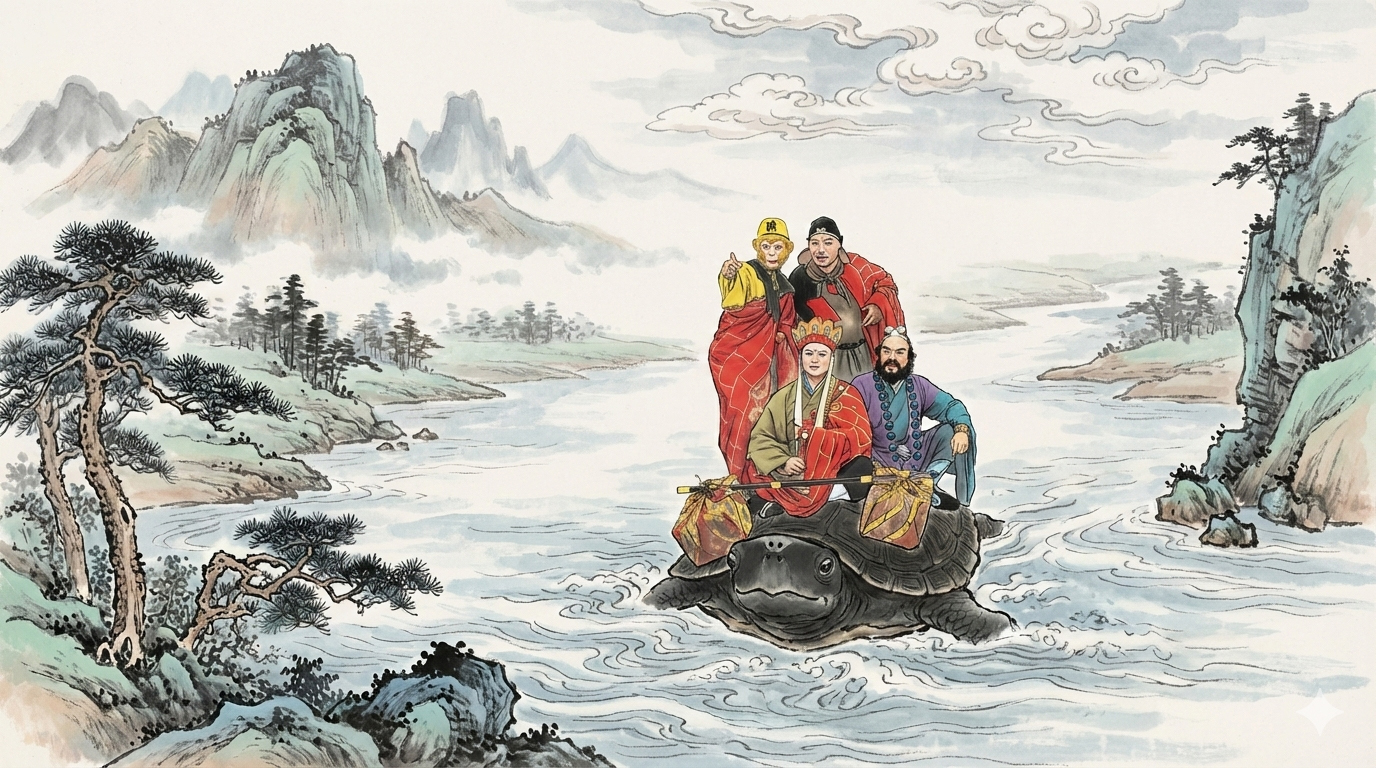
Among all Chinese classics, Journey to the West is one of the most exciting places to start. It has memorable characters, a clear adventure structure, a magical world, and cultural references that many Chinese speakers grow up knowing.
But if you open the original Journey to the West, you may quickly discover a problem: the language is difficult.
That does not mean your Chinese is bad. It means the original text was not written for modern Chinese learners. For HSK learners, a better path is to begin with simple Chinese and graded reading.
Why the Original Journey to the West Is Difficult
Learners often meet:
- older Chinese expressions
- long sentences and dense narration
- Buddhist and Daoist vocabulary
- poems and parallel phrases
- cultural references that require background knowledge
- words that rarely appear in everyday Mandarin
Reading Chinese should not feel like fighting the text line by line. The best reading material is difficult enough to teach you something, but clear enough that you can keep going.
What Is a Chinese Graded Reader?
A good graded reader does not simply make a story shorter. Its real job is to keep the heart of the story while making the language readable.
For Journey to the West, that means you can follow Sun Wukong, Tang Sanzang, Zhu Bajie, and Sha Wujing without needing to understand every old-fashioned phrase from the original novel.
This is not a childish version. It is a learner-friendly version: a bridge between textbook Chinese and real Chinese stories.
Why Journey to the West Works So Well for HSK Reading
- The characters are clear. Each main character has a strong personality, so learners can follow who is doing what.
- The plot repeats in a helpful way. The group travels west, meets a problem, faces danger, solves it, and continues the journey.
- Vocabulary comes back again and again. Words for travel, danger, fighting, protection, teachers, monsters, and plans naturally repeat across chapters.
- The cultural value is high. You meet Chinese mythology, folk religion, Buddhist and Daoist ideas, and famous scenes many Chinese speakers already know.
Which HSK Level Should Start Reading It?
How to Read Journey to the West in Simple Chinese
- First reading: read only the Chinese and catch the main idea. Ask: Who appears? What happens? What is the problem? How does it end?
- Second reading: turn on pinyin to check pronunciation, especially for names and new words.
- Third reading: listen to the audio. Then read aloud or shadow the recording to connect characters, sound, and rhythm.
- Final check: use the popup dictionary and English translation to confirm meaning, not to replace the Chinese reading experience.
Recommended Reading Path on HSKNovels
Start from chapter one instead of jumping randomly into the middle. Long stories become easier when you follow the characters and plot in order.
Common Mistakes Learners Make
- Starting with the original too early. If the text is far above your level, you will spend all your energy checking words instead of building reading fluency.
- Depending on pinyin too much. Use pinyin to confirm pronunciation, but keep your eyes on the Chinese characters first.
- Looking up every new word. Some words can be understood from context. Keeping the story moving is part of reading practice.
- Only memorizing vocabulary lists. Word lists can help with exams, but real reading ability grows from seeing words inside meaningful sentences and stories.
Why Story-Based Reading Helps Chinese Stick
Words like "protect," "defeat," "monster," "teacher," "journey," and "method" appear again and again in Journey to the West. Each time, the context helps you remember.
This is why reading stories can feel easier to continue than memorizing isolated vocabulary. You are not reading only to finish an exercise. You are reading because you want to know what happens next.
Start Reading Journey to the West Today
If the original text is too difficult, begin with simple Chinese and HSK graded levels. With pinyin, audio, popup dictionary support, and English translation, you can build real reading fluency step by step.
Chinese reading should not be only exam training. It can also be a real adventure.
Frequently Asked Questions
Can I read Journey to the West in Chinese as a learner?
Yes, if you use a graded version. The original 西游记 is written in classical-influenced language that is difficult even for advanced learners, but a graded retelling for HSK 3-5 learners keeps the story, characters, and adventures while controlling vocabulary, with pinyin and translation support.
What HSK level do I need to read Journey to the West in simple Chinese?
The HSKNovels graded version is designed for HSK 3 to HSK 5 learners. HSK 3 learners can start with support (pinyin and translation), while HSK 4-5 learners can read more independently and focus on the classic vocabulary and cultural references.
Why is Journey to the West good for Chinese reading practice?
It is one of China's most famous stories, so the plot is easy to follow even with limited vocabulary — you already know Sun Wukong fights demons and protects Tang Seng. This familiarity dramatically reduces reading difficulty, letting you focus on language acquisition rather than plot comprehension.
What will I learn from reading Journey to the West in Chinese?
You will learn classic Chinese mythology vocabulary (monsters, immortals, magic, temples), cultural references that appear in modern media, and narrative reading skills. The graded version also exposes you to key sentence patterns for describing action, journeys, and conflict.