【历史系列:七】明:最后的汉人王朝
Ming: The Last Han Dynasty
HSK4+历史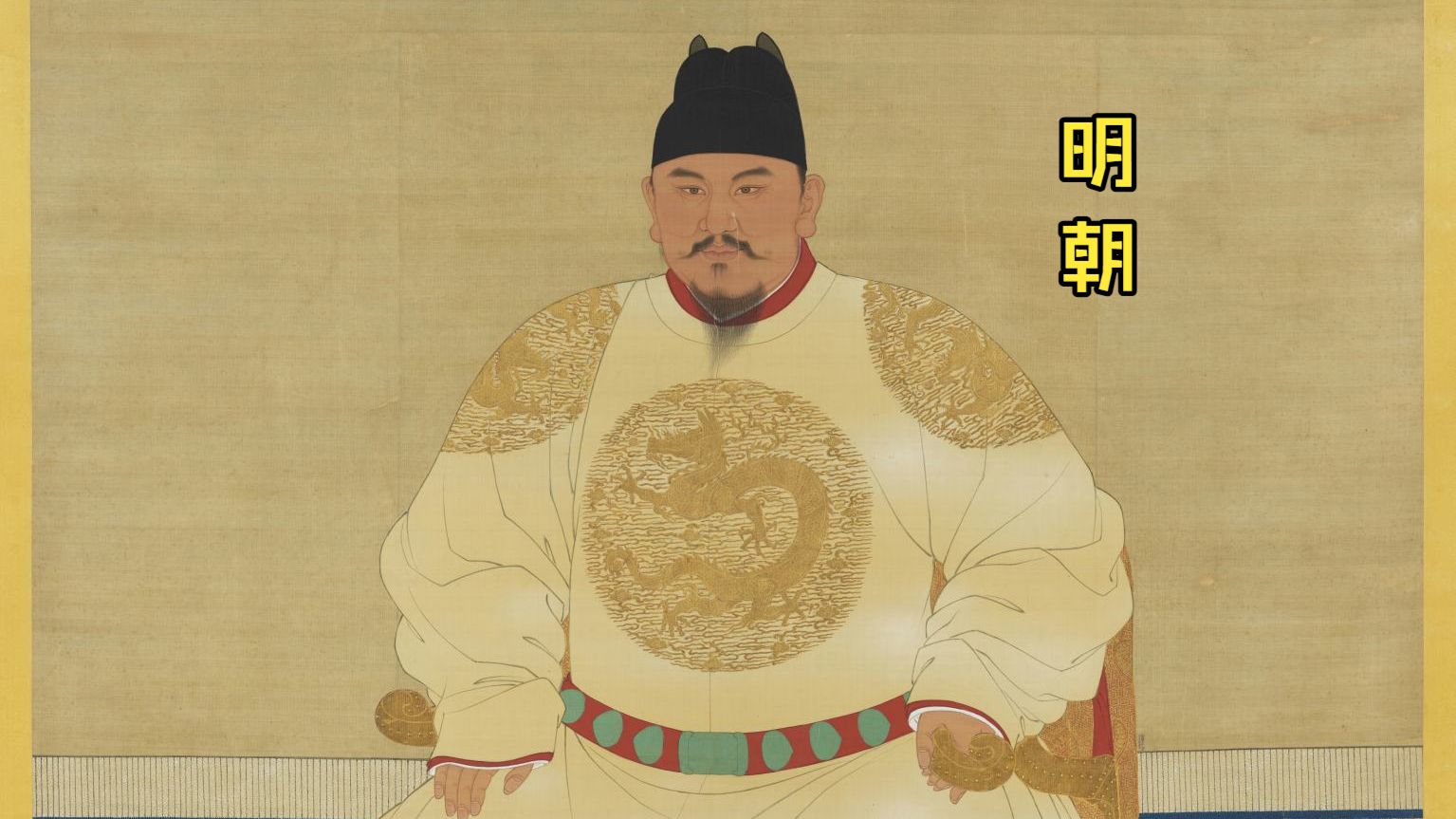
At the end of the Yuan Dynasty, China fell into chaos again.
War, famine, and hunger occurred simultaneously, leaving many people without food.
It was under such circumstances that a man who had herded cattle, been a monk, and even begged for food eventually became emperor.
That man was Zhu Yuanzhang.
1. Beggar, Monk, and Emperor: Zhu Yuanzhang's Counterattack
Zhu Yuanzhang was born into an extremely poor peasant family.
When he was young, his parents and brothers starved to death one after another. To survive, he had to become a monk at a temple.
But at that time, even the temple had no food.
So Zhu Yuanzhang began to wander everywhere. He became a beggar and witnessed the chaos and suffering of war.
Later, the Yuan Dynasty became increasingly corrupt, and rebel armies began to appear in various places. Zhu Yuanzhang also joined one of them.
Zhu Yuanzhang was not only intelligent but also good at employing people.
After more than a decade of warfare, Zhu Yuanzhang finally defeated his rivals.
In 1368, he established the Ming Dynasty in Nanjing.
However, after becoming emperor, Zhu Yuanzhang did not trust his ministers.
He centralized many powers in the hands of the emperor.
He also killed a large number of meritorious officials, including many generals who had fought alongside him.
2. Emperor Yongle: An Emperor Who Rose Through Rebellion
Zhu Yuanzhang's eldest son was the crown prince but died of illness. So he made his grandson the crown prince and made his other sons feudal princes outside.
After his grandson became emperor, he felt that the feudal princes had too much power and began to kill them.
Zhu Di was also a feudal prince. His territory was in Beijing, and he had been fighting the remaining Yuan forces in the north.
Zhu Di had an army and was very capable.
Facing the death threat from the emperor, he launched the famous 'Jingnan Campaign.'
Simply put, it was an uncle fighting his nephew.
After several years of war, Zhu Di successfully entered the capital Nanjing and became the new emperor. He was the later famous Emperor Yongle.
He moved the capital to Beijing, built the Forbidden City, and sent Zheng He on voyages to the Western Seas.
The Ming Dynasty reached its peak during this period.
However, Emperor Yongle was constantly at war, requiring vast amounts of money and food.
And he himself died on the way while fighting.
3. The Tumu Crisis: Why Was the Emperor Captured?
After Yongle, the Ming Dynasty began to encounter problems.
One of the biggest turning points was the 'Tumu Crisis.'
When the Ming Dynasty was established, the Mongols of the Yuan Dynasty fled back to the northern grasslands. Although they had declined, they had not disappeared.
One year, the Mongol army marched south. The young emperor decided to lead the troops himself.
Originally, the ministers disagreed. But the emperor trusted the eunuchs too much.
So this army of hundreds of thousands set off in a hurry.
In the end, a battle took place near Tumu Fortress. The army was surrounded by Mongol cavalry.
The emperor himself was captured.
In Chinese history, it was very rare for an emperor to be captured by the enemy.
When the news reached Beijing, the whole country was shaken. Many thought the Ming Dynasty was about to fall.
But at this time, ministers led by Yu Qian stepped forward. They supported a new emperor's succession and successfully defended Beijing.
Later, the Mongols dragged the captured emperor to the gates of Beijing and 'called the gate.'
Therefore, people also called him 'the Gate-Calling Emperor.'
4. The Emperor Who Didn't Work and the Increasingly Powerful Civil Officials
In the middle and late Ming Dynasty, a strange thing happened: many emperors began to 'skip court.'
The most famous among them was the Wanli Emperor.
In his youth, he was actually very hardworking and wanted to change the country.
But later, he had constant conflicts with his ministers and gradually lost interest.
In the end, he didn't work for decades.
Although the emperor didn't work, the country still had to keep running.
Thus, the power of civil officials grew larger and larger.
At the same time, another force was also expanding.
That was the eunuchs.
To prevent civil officials from having too much power, the emperor began to favor eunuchs and established organizations like the Eastern Depot and the Imperial Guard.
These people were responsible for monitoring officials, somewhat like what today people call 'secret police organizations.'
Although the entire empire was still operating, internally it was becoming increasingly chaotic.
5. The Fall of the Ming Dynasty?
By the late Ming Dynasty, this vast empire was becoming more and more dangerous.
The forces in the north were growing stronger.
Peasants' lives were becoming increasingly difficult.
To fund wars, the court kept increasing taxes. Many places suffered famines, and common people had no food and had to flee.
Peasant uprisings began to appear in various places.
The strongest among them was led by Li Zicheng.
The last emperor of the Ming Dynasty was the Chongzhen Emperor.
In 1644, Li Zicheng's army stormed into Beijing.
The Chongzhen Emperor left the palace and hanged himself from a tree.
The Ming Dynasty, which had ruled China for nearly three hundred years, thus fell.
6. Why Do Many People Miss the Ming Dynasty?
To this day, the Ming Dynasty remains one of the most discussed dynasties in Chinese history.
Some people like it because it was 'tough.'
The Ming Dynasty constantly fought against northern ethnic groups.
Although facing powerful enemies, it rarely bowed down voluntarily.
When the dynasty fell, the Chongzhen Emperor chose suicide over surrender.
Many people therefore think the Ming Dynasty had great 'backbone.'
Others like the culture of the Ming Dynasty.
During the Ming Dynasty, novels, operas, and commerce developed rapidly. Famous works such as 'Journey to the West,' 'Water Margin,' and 'Romance of the Three Kingdoms' became very popular among the people.
Moreover, the lives of ordinary people became richer than before. Big cities became livelier, merchants increased, and society was full of vitality.
However, the Ming Dynasty was not perfect.
In the late Ming, many emperors were unwilling to govern, and civil officials and eunuchs constantly fought each other.
The Ming Dynasty was both glorious and oppressive; both powerful and fragile.
Perhaps this is why, hundreds of years later, many people still miss the Ming Dynasty.