【历史系列:五】宋朝:软弱的富翁
Song Dynasty: The Weak Millionaire
HSK4+历史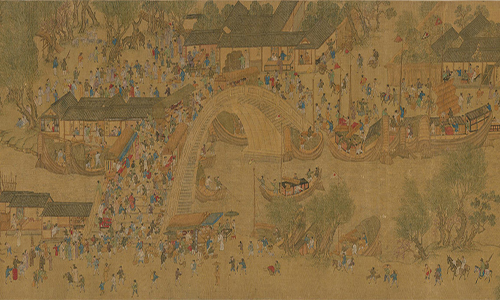
In Chinese history, some dynasties are famous for their powerful armies, such as the Han and Tang dynasties.
But there is also a very special dynasty.
Its economy was developed, cities prosperous, and culture advanced; the living standard of the common people even surpassed that of many earlier dynasties.
However, such a wealthy country always failed in wars.
It was the Song Dynasty.
Many people think that the Song Dynasty was like a 'rich man who doesn't know how to arm himself.'
1. The Chaos at the End of the Tang Dynasty
After the fall of the Tang Dynasty, China once again entered a period of division.
Within a few decades, five different dynasties appeared in succession in the north.
In the south and other regions, many states also emerged.
The whole of China was in great chaos.
Historians call this period the 'Five Dynasties and Ten Kingdoms.'
It was under these circumstances that Zhao Kuangyin appeared.
2. Zhao Kuangyin Establishes the Song Dynasty
Zhao Kuangyin was a general.
In chaotic times, those with armies were the most powerful.
That year, his emperor died, but the emperor's son was only seven years old.
Zhao Kuangyin's subordinates were worried; they needed stable support from the emperor when going out to fight.
One day, Zhao Kuangyin was drinking with his soldiers. He got drunk and lay on the table.
The soldiers suddenly put an emperor's robe on him and shouted 'Long live the emperor!'
In the end, Zhao Kuangyin accepted the support of the soldiers and became the new emperor.
After establishing the Song Dynasty, Zhao Kuangyin was often wary of the military.
Because he was well aware that the current chaos was caused by the military's grip on power.
Therefore, the Song Dynasty began to particularly reduce the power of the military.
The emperor trusted civil officials more, and the status of scholars became higher and higher.
This had a huge impact on the later Song Dynasty.
3. Military Weakness: The Fall of Northern Song
After the Song Dynasty was established, although the economy became increasingly developed, the military problem was never truly resolved.
After the Song was founded, there were always powerful enemies in the north.
To buy peace, the Song Dynasty often gave large amounts of money and silk to northern states.
Many people believed this practice was very weak.
Although this could temporarily reduce wars, the problem was not truly resolved.
Later, after the Liao dynasty in the north fell, the Jin dynasty in the northeast quickly began attacking the Song.
At that time, the Song army's combat effectiveness was already very poor, and the imperial court was also in great chaos.
Later, the Jin army entered the capital Kaifeng.
The two emperors were taken away by the Jin.
The Northern Song perished after 167 years.
4. Southern Song: Rapid Economic and Cultural Development
After the fall of the Northern Song, a royal member named Zhao Gou reestablished the Song Dynasty in the south.
Many common people began fleeing to the south.
China's economic center also gradually shifted from the north to the south.
Historians call this period the 'Southern Song.'
Although it lost large areas of land in the north, the Southern Song's economy developed faster and faster.
The urban population kept increasing, and commerce became more and more developed.
People began to use paper money.
Goods from all over the country could be bought in the markets.
At the same time, Song culture reached a very high level.
Many famous poets and artists lived during this period.
For example: Su Shi, Li Qingzhao, and Xin Qiji.
The Song Dynasty also saw many important inventions.
For instance, gunpowder, the compass, and printing technology all developed further during this period.
It can be said that although the Song was militarily weak, it led the world in economy and culture.
5. The Tragic Fall of the Southern Song
Although the Southern Song was wealthy, a more terrifying enemy appeared in the north.
That was the Mongol Empire.
The Mongol Empire, founded by Genghis Khan, had very powerful cavalry.
Later, the Mongol army continuously attacked southward.
The Southern Song military and civilians put up a long resistance.
Many cities held out for a long time before being breached.
Some ministers and generals refused to surrender until the very end.
One of the most famous figures was Wen Tianxiang.
After being captured by the Mongols, he still refused to surrender and was eventually killed.
In the final battle, the minister Lu Xiufu, seeing the army defeated, carried the eight-year-old emperor and jumped into the sea to their deaths.
After seeing the emperor die, many soldiers and common people followed and jumped into the sea.
The sea surface was covered with floating bodies.
The Southern Song perished after 152 years.

6. The Contradictory Song Dynasty
Why do many people think the Song Dynasty is 'strange'?
Because on one hand it was very advanced, but on the other hand it was very weak.
The Song Dynasty never fully unified China.
But the Song economy achieved unprecedented prosperity.
The Song's land was only a quarter of the Han and Tang's, yet it supported twice the population.
Commerce, handicraft industry, and maritime trade were very developed, and the state mainly relied on these for revenue.
The population of the Song capital exceeded one million, while at the same time, the important European city of Venice had only about one hundred thousand people.
Despite such prosperity, the Song often failed militarily.
It often relied on giving money to the other side to buy peace.
Even today, people still discuss:
If there had been no war, would the Song Dynasty have developed into a completely different China?
Although the Song Dynasty eventually fell, its cultural influence has persisted to this day.