【历史系列:三】不灭的汉朝
The Immortal Han Dynasty
HSK4+历史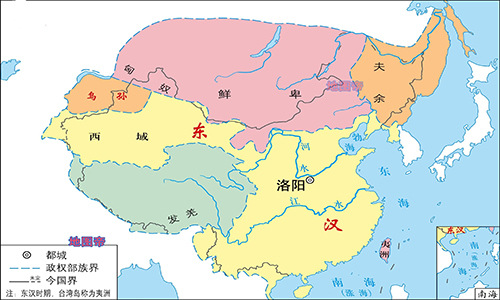
After the Western Han Dynasty fell, many people thought the Han Dynasty was over. Actually, that's not the case. In China, the character 'Han' has a very strong influence. After the Western Han Dynasty fell, descendants of Liu Bang established the Eastern Han Dynasty. After the Eastern Han Dynasty fell, some people continued to use the banner of 'Han'. Why is that? Because in many people's hearts: 'Han' is no longer just a dynasty. It is more like a culture and identity.
Section 1: Wang Mang usurped the Han: the fall of Western Han. In the late Western Han, Wang Mang became the highest official. The power in his hands grew larger and larger, surpassing the emperor. Later, he directly seized the throne. History calls this event 'usurping the Han'. Wang Mang established a new dynasty: the Xin Dynasty.
Section 2: Wang Mang's death, the fall of the Xin Dynasty. After Wang Mang established the Xin Dynasty, many of his practices were not successful. The common people could not get enough to eat, and uprisings began in various places. Among them, there was a very famous group. They called themselves the 'Red Eyebrow Army'. Because they painted their eyebrows red, everyone called them that. Wang Mang was killed by the rebel army. The Xin Dynasty only existed for 15 years before it fell.
Section 3: Liu Xiu: The man who reestablished the Han Dynasty. After Wang Mang's death, China fell into chaos again. Many people began to contend for the world. Just at that time, a man named Liu Xiu appeared. Liu Xiu was a descendant of Liu Bang, the founding emperor of the Han. Unlike many people who liked war, Liu Xiu had a relatively calm personality. He was good at using talents and managing the army. After many years of war, Liu Xiu finally reunified the country. In 25 AD, he reestablished the Han Dynasty. History called this new Han Dynasty the 'Eastern Han'. Why is it called 'Eastern Han'? Because the capital of Eastern Han was Luoyang, while the capital of Western Han was Chang'an. And Luoyang is east of Chang'an. So it is called Eastern Han.
Section 4: The fall of the Eastern Han. When the Eastern Han was first established, the country was in good shape. But later, problems arose again. First, many emperors were too young. The people who actually controlled the court were often not the emperor. Sometimes they were maternal relatives, sometimes eunuchs. They constantly fought for power. The court became increasingly chaotic. The people's lives became harder and harder. Finally, a large-scale uprising broke out. This was the famous 'Yellow Turban Rebellion'. Although the Eastern Han later suppressed the rebellion, the country became increasingly unstable. In the end, the Eastern Han, which had existed for 195 years, fell. China entered a new era: the Three Kingdoms period.
Section 5: The Three Kingdoms period: Why is there still 'Han'? During the Three Kingdoms period, there were three important states: Wei, Wu, and Shu. However, many people liked to call Shu 'Shu Han'. Why? Because the founder of Shu, Liu Bei, believed: He himself was a descendant of the Han imperial family. He thought: 'Although the Han Dynasty has fallen, I will continue the Han Dynasty.' Therefore, the state Liu Bei established always used the name 'Han'. He hoped that one day he could reunify the world and continue the glory of the Han Dynasty. However, in the end, Shu Han failed. The Three Kingdoms gradually came to an end.
Section 6: The immortal 'Han'. After the Han Dynasty, the name 'Han' did not disappear. Many later people greatly admired the Han Dynasty. Many rebel armies said that they were the true inheritors of the Han Dynasty. Some leaders even directly pretended to be descendants of the Liu family. This practice had a great influence. To this day, Chinese people often say: Han characters, Han language, Han ethnicity. The Han Dynasty is no longer just a dynasty. It is more like a cultural memory. The Han Dynasty formed the most important foundation of Chinese culture.