【历史系列:二】汉朝:中国的崛起之路
Han Dynasty: China's Rise
HSK4+历史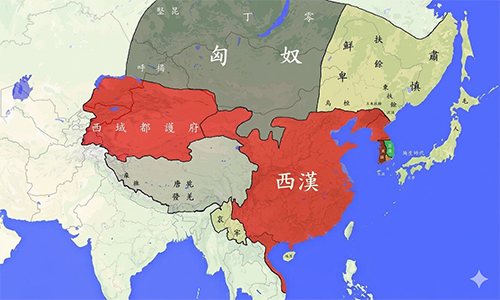
After the fall of the Qin dynasty, China did not immediately enter a peaceful era. On the contrary, the world fell into chaos again. In the midst of this turmoil, a man of humble birth slowly changed Chinese history. His name was Liu Bang. He founded the Han dynasty. The Han dynasty was one of the most powerful and important dynasties in Chinese history. From then on, the main ethnic group of China was called the 'Han ethnic group'.
Liu Bang: A Man Unlike an Emperor
When Liu Bang was young, he didn't like to work seriously. He loved drinking, chatting, and often played with friends. Many people thought he was like a street thug. However, Liu Bang had a special advantage: he was very good at making friends. After the Qin dynasty became increasingly chaotic, various places began to revolt against the Qin. Liu Bang joined the rebellion. At the same time, another very formidable person emerged. His name was Xiang Yu.
The Chu-Han Contention: The War Between Liu Bang and Xiang Yu
At that time, the rebel armies had agreed: whoever entered Guanzhong first could claim kingship. Liu Bang entered Xianyang earlier than others. The Qin dynasty officially fell. However, Xiang Yu's army was stronger than Liu Bang's at the time. Xiang Yu thought: 'I am the one who truly defeated the Qin, why is Liu Bang the first to claim kingship?' Therefore, he invited Liu Bang to a banquet. History calls this dangerous banquet the 'Banquet at Hongmen'. Xiang Yu's strategist wanted to kill Liu Bang at the banquet, but Xiang Yu hesitated. Liu Bang sensed something was wrong, made an excuse to leave the banquet, and fled back to his camp. Later, Xiang Yu divided the realm. Liu Bang was enfeoffed to the relatively remote Hanzhong region as the 'King of Han'. However, Liu Bang did not give up. He developed his own strength while seeking more talents. On the contrary, although Xiang Yu was very good at fighting, he gradually lost the support of many people. In the end, Liu Bang defeated Xiang Yu. In 202 BC, Liu Bang established the Han dynasty. He became the first emperor of the Han dynasty: Emperor Gaozu of Han.
The Han Dynasty and the Xiongnu
After the Han dynasty was established, it did not immediately become relaxed. Because in the north there was still a powerful enemy: the Xiongnu. The Xiongnu lived on the grasslands. They made a living by nomadic herding and were also very good at fighting. When the Han dynasty was first established, its national strength was insufficient, so it was often attacked by the Xiongnu. Once, Liu Bang personally led troops into battle and was surrounded. From then on, the Han dynasty changed its approach. While maintaining peace with the Xiongnu, it prepared for war. Sometimes, the Han dynasty even married princesses to the grasslands. This practice is historically called 'heqin' (peace marriage). Although many people did not like this method, it helped the Han dynasty gain time for development.
The Rule of Wen and Jing: The Han Dynasty Begins to Prosper
After Liu Bang's death, Emperor Wen of Han and Emperor Jing of Han became emperors. During this time, the country was well governed. No large-scale wars occurred. Farmers began to plant more grain, and the state became increasingly wealthy. History calls this period the 'Rule of Wen and Jing'. After decades of development, the Han dynasty gradually became powerful. The era truly belonging to the Han dynasty had begun.
Emperor Wu of Han: The Strongest Man of the Han Dynasty
Later, a very famous emperor appeared. He was Emperor Wu of Han. If Liu Bang founded the Han dynasty, then Emperor Wu truly turned the Han dynasty into a powerful empire. Emperor Wu was a very ambitious man. He no longer wanted to make concessions to the Xiongnu. Therefore, the Han dynasty began a large-scale offensive against the Xiongnu. This war lasted many years. Although very arduous, the Han dynasty gradually achieved victory. At the same time, Emperor Wu continuously expanded the territory of the Han dynasty. The influence of the Han dynasty began to reach farther places. Later, the important trade route between China and the West gradually emerged. This route was later called the 'Silk Road'. Many foreigners learned about China for the first time.
Intervention by Relatives of the Empress: The Western Han Begins to Decline
However, no matter how powerful a dynasty is, problems will gradually appear. In the late Han dynasty, the emperors became increasingly young. Therefore, some relatives of the emperors began to enter the court. These people began to hold power. Some were even more powerful than the emperor. The court became more and more chaotic. Later, a man named Wang Mang seized the throne. The Han dynasty founded by Liu Bang fell. History refers to this period as the Western Han.
The Han Dynasty Did Not Really End
Although the Western Han fell, the 'Han' did not disappear. Later, descendants of Liu Bang established the Han dynasty multiple times. The Han dynasty was also the longest dynasty in Chinese history, lasting over four hundred years. It was much longer and more stable than the Qin dynasty. China's important culture and institutions gradually emerged during the Han dynasty. If the Qin dynasty completed the unification of China, then the Han dynasty truly turned China into a powerful civilized nation.