等你回来: A Chinese Historical Love Story Written for HSK5+ Learners
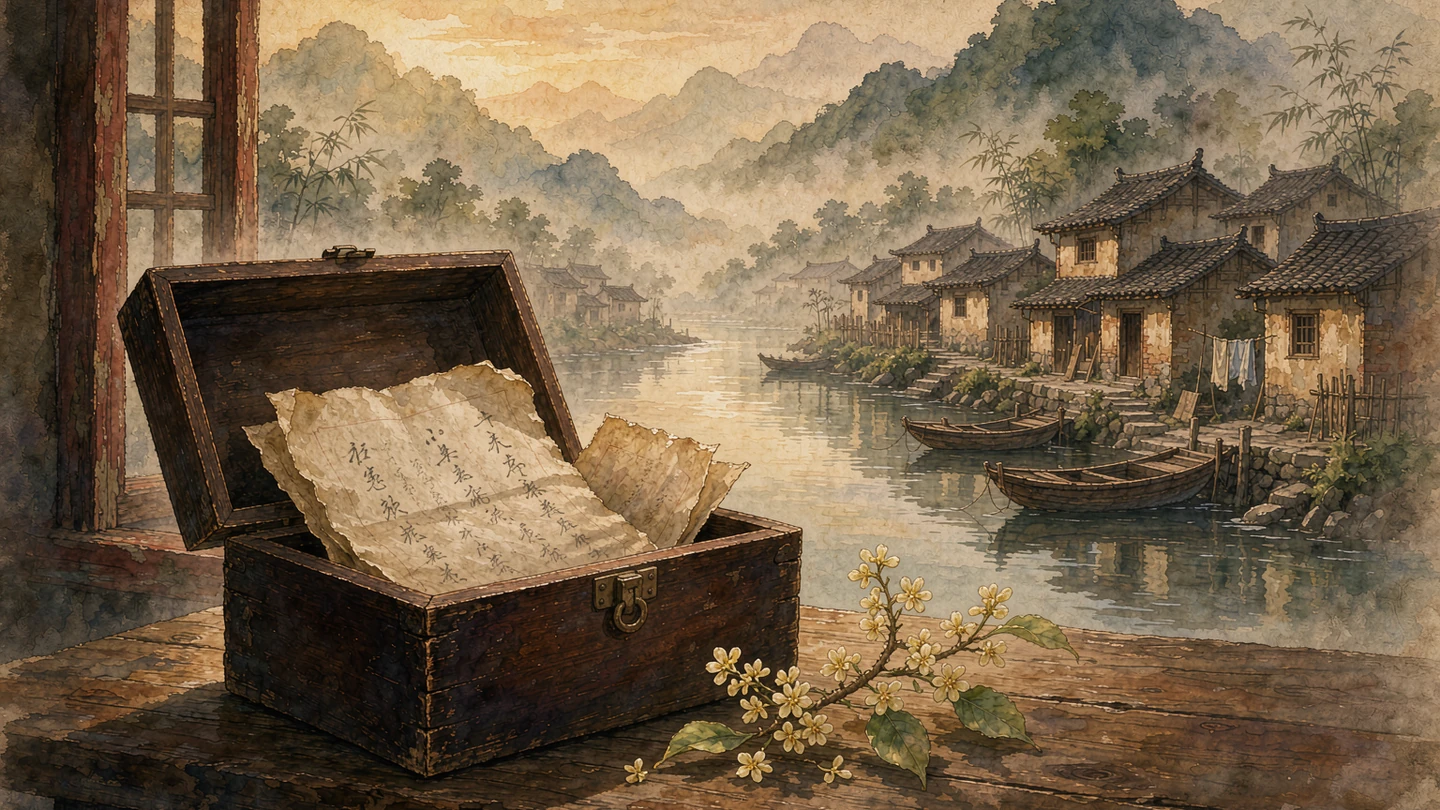
“秀兰,桂花开了,我就回来。” — Xiulan, when the osmanthus blooms, I will come back.
That one line is the last thing a soldier writes home in 1937. His young wife keeps the letter for the rest of her life — without ever opening it. She is waiting for a man, and for a sentence she cannot even read herself.
This is 等你回来 (Waiting for You to Come Back), the first Chinese historical love story on HSKNovels, written for HSK5+ readers. It is not a war story and it is not a textbook. It is a love story about one promise — and it may be the most emotional Chinese you read this year.
Read This One Line. Then Decide.
秀兰,桂花开了,我就回来。
Xiùlán, guìhuā kāi le, wǒ jiù huílái.
“Xiulan — when the osmanthus blooms, I will come back.”
Almost every word here is HSK4–HSK5 vocabulary. Only 桂花 (osmanthus — the flower) is likely new to you. That is the design of the whole novel: it stays inside your level, and it repeats its emotional words — 桂花, 信, 回来 — like a heartbeat, until you own them without a dictionary.
The Story in Three Scenes (No Spoilers)
1937 · The village gate. War is coming and he must return to his unit. At the gate she presses a pair of hand-sewn cloth shoes into his hands — so they won't rub your feet — and says the sentence that names the book: 我等你回来, “I will wait for you to come back.” He tells her not to wait. She says it again.
1938 · A letter travels for a month. Xiulan cannot read, so the old scholar in town reads his letters aloud to her. When she writes back, he learns he will be a father — and he answers: if it is a son, call him Agui; when the osmanthus blooms, I will come home.
Then the letters stop. And seventy years later, in the same empty village, a quarrelling young couple finds an old wooden box with an unfinished letter inside — a sentence about osmanthus, and a debt that sounds like it crosses lifetimes.
Why This Story Is the Right Level — Not Too Easy, Not a War Book
- Historical words (家书, 木匣子, 千层底) always appear where the meaning is clear from the scene.
- The war is the reason for the separation — never the content. No battle scenes to decode, no politics, no graphic detail.
- The difficulty lives in feeling, not in vocabulary lists: longing, waiting, small promises, a child growing up.
- Every sentence carries pinyin and an English translation, and audio is aligned line by line for listening practice.
- The two modern chapters (a couple arguing in the old village) are the easiest — a warm doorway before the story turns back to 1936.
Six Phrases the Story Will Give You
- 我等你回来 (wǒ děng nǐ huílái) — “I will wait for you to come back.” The promise the whole story is built on.
- 桂花 (guìhuā) — osmanthus, the small autumn flower that becomes the story's clock: bloom, wait, come home.
- 家书 (jiāshū) — a letter from home; before phones, a family's only voice across a war.
- 见字如面 (jiàn zì rú miàn) — “seeing the words is like seeing you”: the greeting of almost every old Chinese letter.
- 千层底 (qiāncéngdǐ) — the thousand-layer cloth sole of the shoes Xiulan sews: patience you can hold in your hand.
- 阿桂 (Āguì) — the son's name, “Little Osmanthus”: a promise that someone will come back for.
How to Read It (Three Passes, No Giving Up)
- Pass one: read for the feelings. Who loves whom? What is the promise? Ignore unknown words.
- Pass two: reread and check only the words that block the scene — pinyin first, translation only if you are stuck.
- Pass three: listen to the audio while following the text, then try one short paragraph aloud.
Frequently Asked Questions
Can I really read a love story like this at HSK5?
Yes — that is exactly what the book is designed for. 等你回来 stays in the HSK5+ band: almost every sentence is built from HSK4–HSK5 vocabulary, emotional words like 桂花 and 回来 repeat through the story, and every line has pinyin, an English translation, and aligned audio. The two modern chapters are the easiest, so you can warm up before the story turns back to 1936.
Is this book a war story?
No. The war is only the reason the couple is separated — the story itself is about a promise, letters, waiting, and family. There are no battle scenes to decode, no politics, and no graphic detail. The difficulty is emotional, not military.
Do I need to know 1930s Chinese history to enjoy it?
Not at all. Historical details (cloth shoes, letters from home, an old village) always appear where the scene makes their meaning clear, and the story's real vocabulary — waiting, promising, missing someone, raising a child — is everyday advanced Chinese.
What is different about reading this versus a native Chinese novel?
A native novel at HSK5 usually buries you in unfamiliar literary vocabulary. This story keeps the emotional, literary feeling but controls the language to your level, adds pinyin and translation support per sentence, and repeats its key words so you finish the book instead of abandoning it in chapter two.
Which HSK level is best to start reading 等你回来?
The book is written for HSK5+ learners. If you are finishing HSK5 or preparing for HSK6, you can read it with the pinyin and translation support when needed. If you are still at HSK4+, start with an HSK4–5 love story such as Before the Coffee Gets Cold to build stamina first.